How to Know If You Have Sensitive Skin?

Do you feel a stinging sensation when you apply skincare products? Does your face turn red easily? You might have sensitive skin. Many people in Singapore struggle with this condition, but understanding the signs can help you find the right care for your skin.

Key Takeaways

  • Sensitive skin shows clear signs like redness, burning, itching, and tightness
  • Singapore’s hot and humid climate can make sensitive skin worse
  • Sensitive skin is different from sensitised skin (one is permanent, one is temporary)
  • Certain ingredients in skincare products can trigger reactions
  • Professional skin analysis can help you understand your skin type better
  • The right treatment can calm and strengthen your skin barrier

Common symptoms of sensitive skin including redness, burning, itching, tightness and stinging.

What Are the Signs of Sensitive Skin?

Sensitive skin is not just a feeling. It shows real signs that you can see and feel. According to research from dermatology experts, sensitive skin syndrome affects between 38% to 51% of people worldwide. In Singapore’s tropical climate, this number may be even higher.

Common Symptoms to Watch For

Redness and Flushing
Your face turns red easily, especially on your cheeks and nose. This happens when blood vessels near the skin surface get wider. The redness might come and go, or it might stay all day.

Burning and Stinging Sensations
When you put on creams or wash your face, you feel a burning or stinging feeling. This is one of the strongest signs of sensitive skin. Studies show that people with sensitive skin feel these sensations more strongly than others.

Itching and Irritation
Your skin feels itchy even when you cannot see any rash. The itching gets worse after using certain products or in hot weather.

Tight and Dry Feeling
Your skin feels tight, like it is being pulled. This happens because sensitive skin often has a weak protective barrier that loses water easily.
Woman with sensitive skin touching her face gently

How Singapore’s Climate Affects Sensitive Skin

Singapore’s weather can be hard on sensitive skin. The high humidity (around 80% most days) and hot temperatures create special challenges.

Heat and Humidity Triggers

Research shows that humid weather can make your skin barrier weaker. When you move from hot outdoor air to cold air-conditioned rooms, your skin has to adjust quickly. This constant change can cause more redness and irritation.

The heat makes you sweat more. Sweat can irritate sensitive skin and make it feel itchy. Also, in humid weather, heavy skincare products do not absorb well and can clog your pores.

Environmental Stressors in Urban Singapore

City life adds more stress to your skin:

  • Air pollution from traffic and buildings can damage your skin barrier
  • UV rays are strong all year round in Singapore
  • Air conditioning dries out your skin
  • Mask wearing (when needed) can cause friction and trap heat

Studies from Singapore dermatology clinics show that more people report sensitive skin now than 10 years ago. Experts believe this is partly due to environmental factors.

Sensitive Skin vs Sensitised Skin: What Is the Difference?

Many people confuse these two conditions, but they are different.
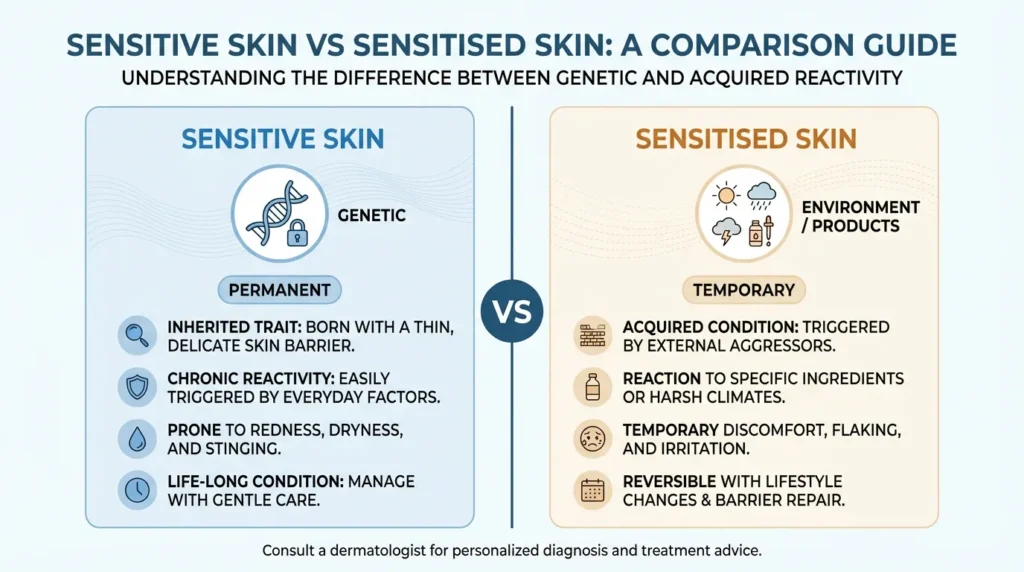
Comparison chart showing differences between sensitive skin and sensitised skin

Sensitive Skin (Permanent Condition)

This is a skin type you are born with. Research shows that it often runs in families. If your parents have sensitive skin, you are more likely to have it too. The skin barrier is naturally weaker and reacts easily to many things.

Sensitised Skin (Temporary Condition)

This happens when your skin becomes reactive because of external factors. Your skin was normal before, but something made it sensitive. Common causes include:

  • Using harsh skincare products
  • Over-exfoliating your skin
  • Damage from the sun
  • Using too many products at once
  • Stress and lack of sleep

The good news is that sensitised skin can get better when you stop using the wrong products and give your skin time to heal.

Ingredients to Avoid If You Have Sensitive Skin

Certain ingredients can trigger reactions in sensitive skin. Dermatology research has identified several common irritants.

Fragrances and Perfumes

These are the most common causes of skin reactions. Even “natural” fragrances can irritate sensitive skin. Always choose products marked “fragrance-free” (not just “unscented”, as these may still contain masking fragrances).

Harsh Cleansing Agents

Sodium lauryl sulphate (SLS) and similar ingredients can strip away your skin’s natural oils. Look for gentle, sulphate-free cleansers instead.

Alcohol and Astringents

Denatured alcohol and witch hazel can dry out your skin and make redness worse.

Strong Acids and Retinoids

High concentrations of glycolic acid, salicylic acid, or retinol can be too strong for sensitive skin. If you want to use these, start with low concentrations and use them slowly.

Synthetic Colours and Dyes

These ingredients serve no purpose for your skin and can cause irritation.

Gentle organic skincare products suitable for sensitive skin

How Professionals Diagnose Sensitive Skin

At Sage & Fawn, we use advanced technology to understand your skin properly. Self-diagnosis can be wrong because many skin conditions look similar.

Advanced Skin Analysis

We use the IOMA i-DIAG technology, which measures several factors:

  • Hydration levels to see if your skin barrier is working well
  • Sebum activity to check oil production
  • Skin firmness and elasticity

Skin Barrier health and detect Inflammation This scientific approach gives us clear data about your skin, not just guesses. Research shows that objective testing is much more accurate than self-reporting.

Patch Testing

In some cases, we may recommend patch testing. This involves putting small amounts of common allergens on your skin to see which ones cause reactions. This test helps identify if you have allergic contact dermatitis or other specific sensitivities.

When Should You See a Specialist?

You should seek professional help if:

  • Your symptoms do not improve after changing your skincare routine
  • You have severe redness or rashes
  • Your skin problems affect your daily life or confidence
  • You keep getting skin infections
  • You are not sure what is causing your skin reactions

Early treatment can prevent your skin from getting worse. At our East Coast clinic, we have over 30 years of combined experience in treating sensitive skin conditions.

Treatment Options for Sensitive Skin in Singapore

The right treatment can make a big difference to sensitive skin.

Phyt’s Sensi Treatment

Our Phyt’s Sensi Treatment is specially designed for sensitive and reactive skin. This organic facial uses 100% ECOCERT certified natural ingredients:

  • Magnolia helps calm irritation and reduce redness
  • Belle de Nuit repairs and strengthens skin overnight
  • Cotton Flower provides protection and comfort

This treatment is safe during pregnancy and ideal for skin that reacts easily to products.

Building a Gentle Skincare Routine

For daily care at home:

  1. Cleanse gently with a mild, fragrance-free cleanser. Do not use hot water.
  2. Moisturise immediately after cleansing to lock in hydration.
  3. Use sun protection every day with mineral sunscreen (zinc oxide or titanium dioxide).
  4. Introduce new products slowly, one at a time, waiting at least a week before adding another.
  5. Keep it simple. Using too many products can overwhelm sensitive skin.

Lifestyle Changes That Help

Your daily habits matter too:

  • Drink plenty of water to keep your skin hydrated from inside
  • Get enough sleep so your skin can repair itself
  • Manage stress through exercise or meditation
  • Eat a balanced diet with vitamins and omega-3 fatty acids
  • Avoid very hot showers and baths

Get a Professional Skin Analysis Today

Stop guessing about your skin type. Our experts at Sage & Fawn use advanced IOMA technology to give you accurate answers about your skin. We can create a personalised treatment plan just for you.

Located in East Coast, Singapore, we combine 30 years of skincare expertise with the latest technology and natural organic treatments.

Frequently Asked Questions

Can sensitive skin be cured?

If you have naturally sensitive skin (a genetic condition), it cannot be “cured”, but it can be managed very well. You can strengthen your skin barrier and reduce reactions significantly with the right care. If you have sensitised skin (caused by external factors), this can improve and even return to normal once you remove the irritants and heal your skin barrier.

This depends on the cause and treatment. Sensitised skin often shows improvement in 4 to 6 weeks with proper care. For naturally sensitive skin, you may notice calmer skin within 2 to 3 weeks of using gentle products, but ongoing management is needed. Professional treatments can speed up the healing process.

No, they are different. Sensitive skin reacts to many things and shows symptoms like stinging and burning. Allergic skin reacts to specific allergens and shows symptoms like rashes and swelling. Allergic reactions often need patch testing to identify the exact cause. Some people have both conditions.

Some makeup products can irritate sensitive skin, especially those with fragrances, preservatives, or certain pigments. However, many brands now make products specifically for sensitive skin. Look for mineral makeup and products labelled “hypoallergenic” and “non-comedogenic”. Always do a patch test before using a new makeup product on your whole face.

If your skin is very irritated, it may help to stop everything except a gentle cleanser and basic moisturiser for 1 to 2 weeks. This gives your skin time to calm down. Then slowly add products back one at a time. However, it is best to get professional advice, as completely stopping all care might not always be the right approach.

Not always. While many natural ingredients are gentle, some can still cause reactions (for example, essential oils or plant extracts). What matters most is avoiding known irritants and choosing products tested for sensitive skin. At Sage & Fawn, we use ECOCERT certified organic products that are specifically formulated for sensitive skin, combining the benefits of natural ingredients with proven safety.

Final Thoughts

Understanding your skin is the first step to caring for it properly. Sensitive skin needs gentle care, the right products, and sometimes professional help. Singapore’s climate adds extra challenges, but with proper knowledge and treatment, you can have comfortable, healthy skin.

If you are unsure about your skin type or need expert guidance, visit Sage & Fawn for a thorough skin analysis. Our team combines decades of experience with advanced technology to give you personalised care that really works.

SF Community Membership Program tiers and benefits comparison table from Sage & Fawn Skin + Wellness. It details membership levels: Bambi, Willow, Olive, Baobab, and Juniper, with entry requirements, free credits, complimentary skin analysis sessions, birthday discounts, welcome gifts, shareable memberships, VIP events & workshops, and seasonal surprise rewards.